











19%
of AI spend
Private equity firm
Estimated spend traced to personal accounts. Those users are now moving onto corporate accounts.
Value Intelligence
Value Intelligence groups every agent session into the business work it served, in your organization's own vocabulary, and ties the spend behind it to the agent, owner and team. It reads from the same record your security team uses for agent risk, so you can weigh what each agent is worth against the risk it carries.










And dozens more
Agents are doing real work across the business, and the board wants to know what that investment returns. Cost Intelligence measures the spend, and Value Intelligence adds the use cases, teams and work it served.
Both read from the record that already powers Geordie's risk intelligence, so the security team that put it in place for agent risk can also bring the business its answer on value.
Every session gets one use case from a catalog built from your own sessions, and a session that doesn't fit is left Unclassified rather than guessed. Knowing what work an agent does also tells security which of its permissions and findings to look at first.
412 agents
25 use cases · 30 days
Product planning and design
$9.8K 8.3%
Infrastructure provisioning and changes
$9.2K 7.8%
Security policy development
$7.8K 6.6%
Code review
$5.1K 4.3%
Marketing content creation
$3.8K 3.2%
Customer issue investigation
$2.5K 2.1%
Product testing and evaluation
$1.5K 1.3%
Competitive intelligence research
$520 0.4%
Workflow automation
$330 0.3%
Personal use
$260 0.2%
412 agents 25 use cases · 30 days
Value Intelligence finds the patterns that burn spend without producing work and maps each one to the agents, owners and org units behind it. An idle agent that still holds credentials matters to security as much as to finance, because that access can simply be removed.
Repeated sessions with high token use and very little productive output.
Simple tasks running on a frontier model when a smaller one would do the job.
Agents with no activity for 30 days whose seats, connectors and storage keep costing, and limits that stall work mid-run.
Value Intelligence reads the collection that already powers Risk Intelligence, with no new gateway or deployment. Each risk finding arrives with its owner, team and spend attached, so security can judge an agent doing core engineering work differently from an idle one with the same access.
Graeme Cantu-Park, CIO and CISO at Matillion
19%
of AI spend
Estimated spend traced to personal accounts. Those users are now moving onto corporate accounts.
$7K
a week
Caught in a single looping chat, while role-level usage showed which teams to support next with enablement.
“The conversation has changed from getting everyone to use AI to what value we are actually getting from it. We could tell departments how much they were spending, but not the use cases behind it. Geordie has given us visibility into those use cases on a department, organization or even individual basis, and tied the cost back to those core pieces of work.”

“I used to rely on people telling me their two-hour AI saves each week to feed my ROI formula, and I knew I was probably missing half of it. Now Geordie is a validation point for cost, agent runs and what teams are actually working on, and I can apply that to our full value and ROI models.”
Connect Geordie to the agents your teams already run, and find out which work earns its cost back and which risks are worth carrying for it.
Your request has been received.
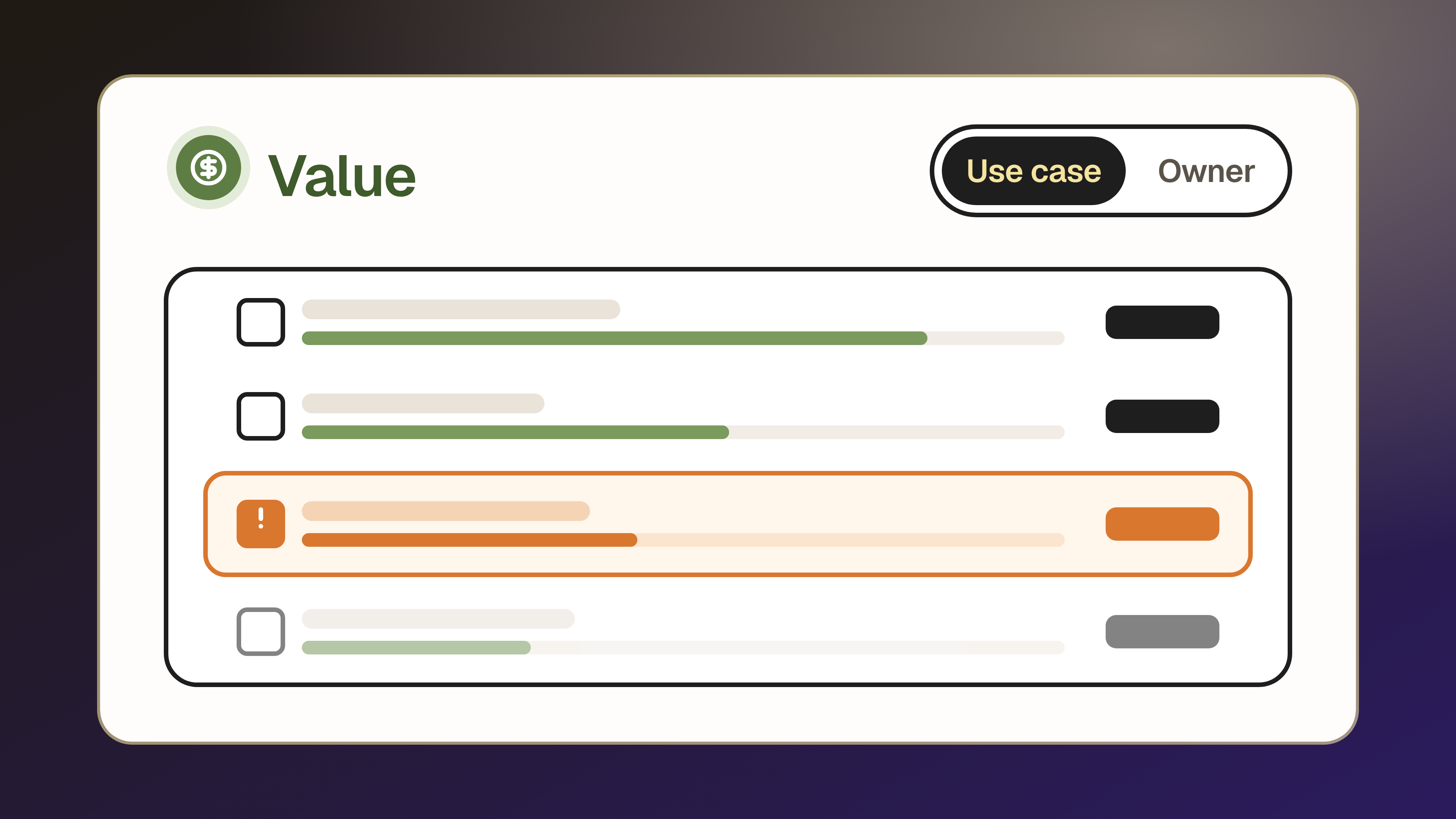
What do agents cost and deliver? Spend tied to the work agents perform, the value it returns and the risk security teams manage.
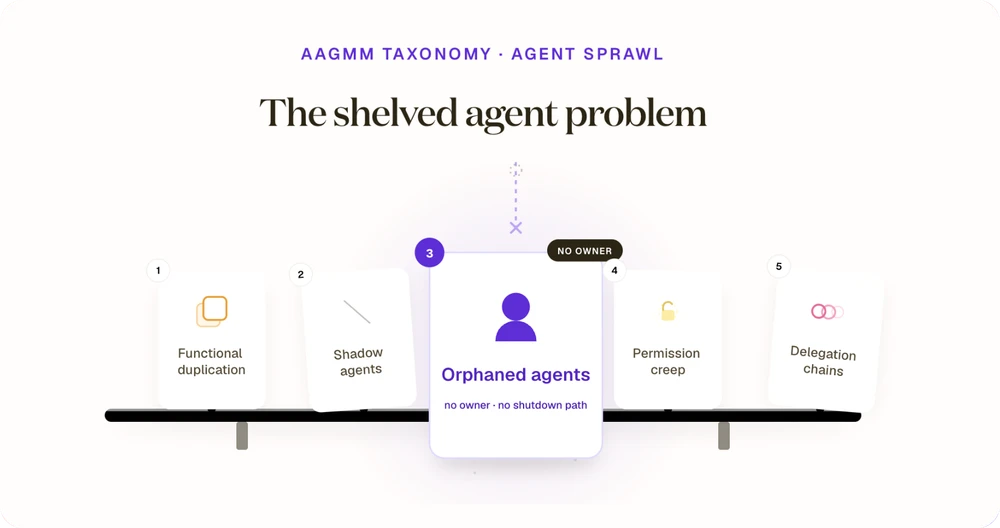
When enterprises iterate on their agent workflows, older agents rarely get decommissioned.
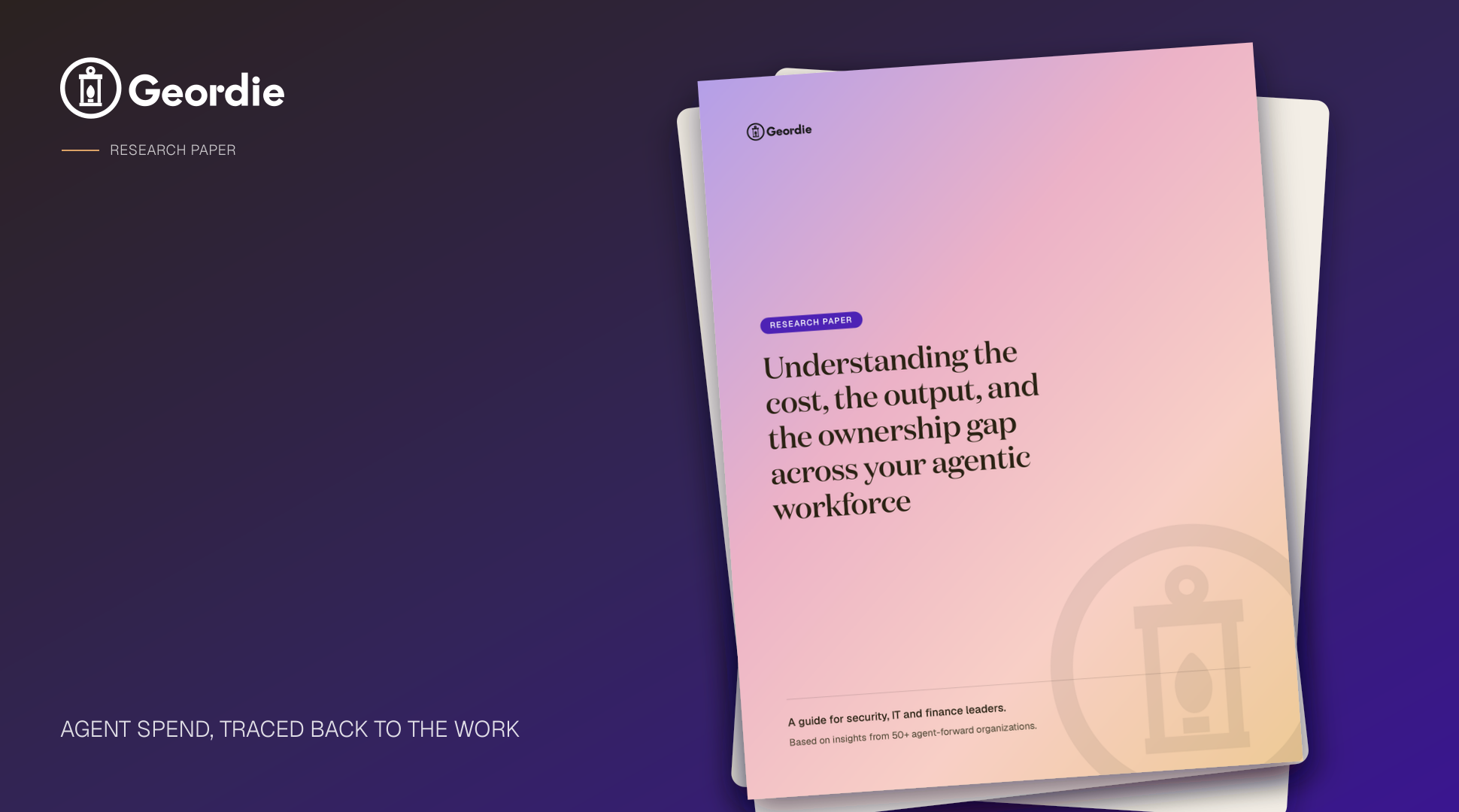
What 50+ organizations running agents in production told us about agent spend, who owns it, why the bill doesn't explain itself, and what to do instead of freezing.